The Valley

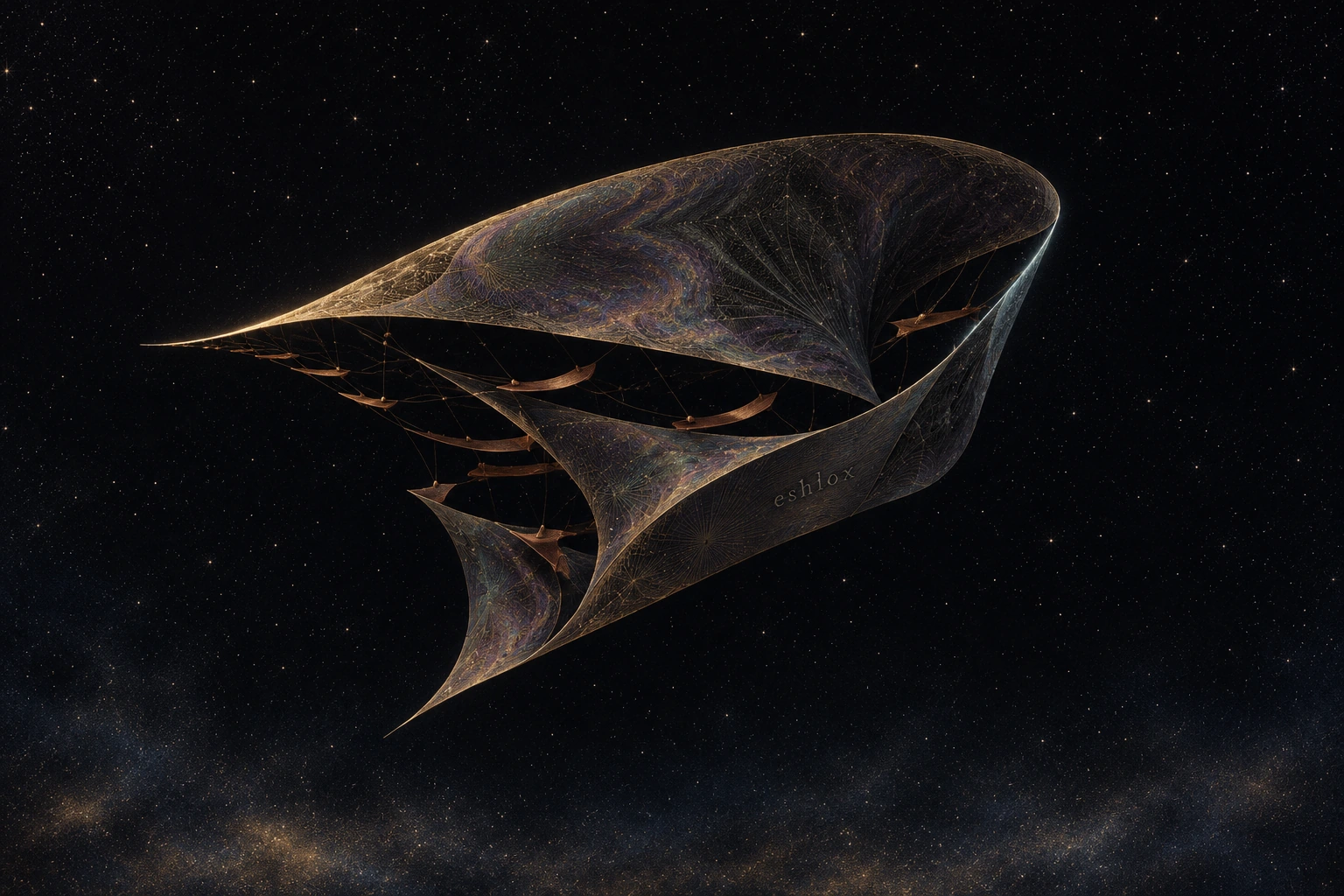
Three dark, folded surfaces hang apart against the stars. Fine copper fins span the gaps, and a small inscription on the lower face reads ‘eshlox’.
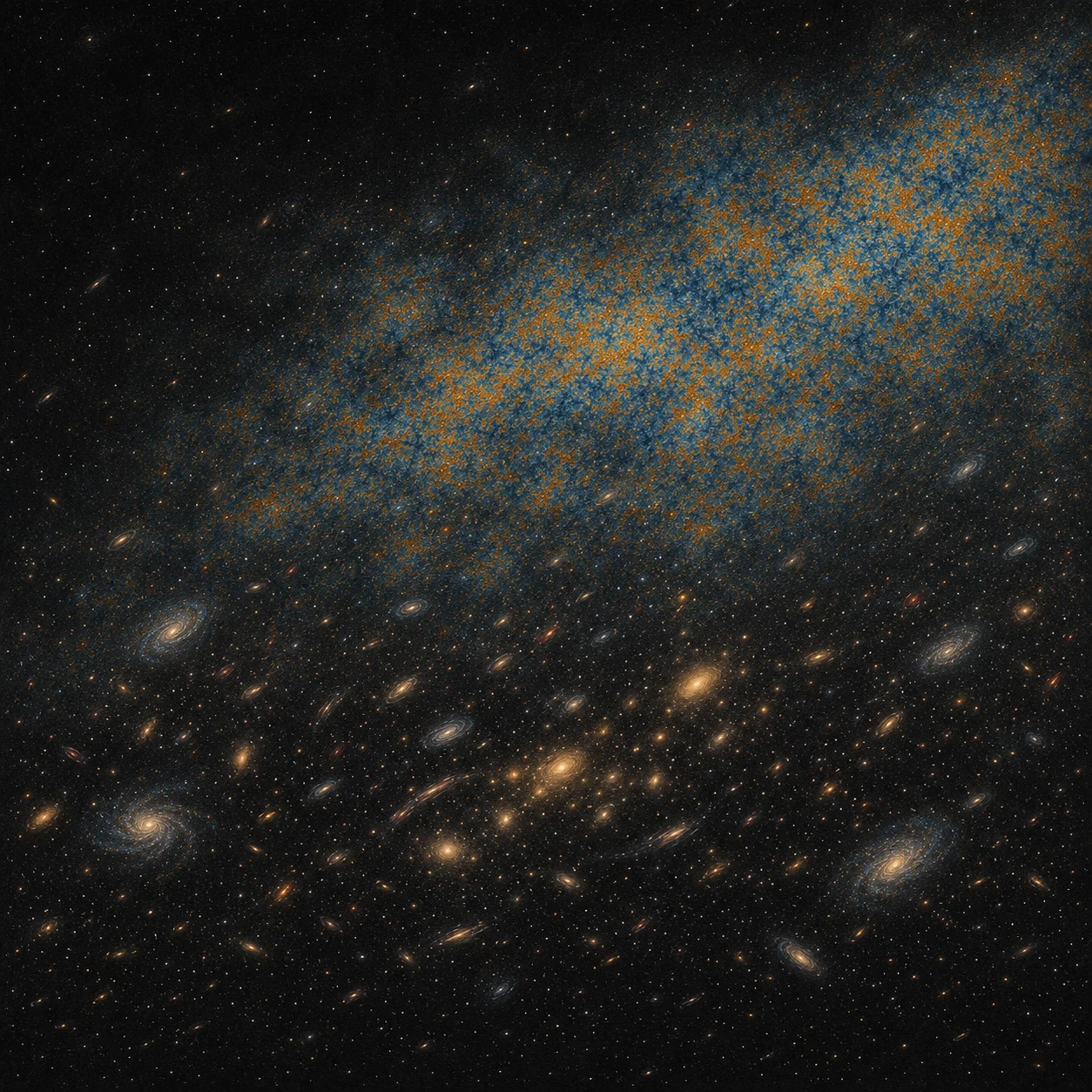
A false-colour interpretation of slight temperature variations in the cosmic microwave background fades into a field of early galaxies. Looking farther away also means seeing farther back in time.
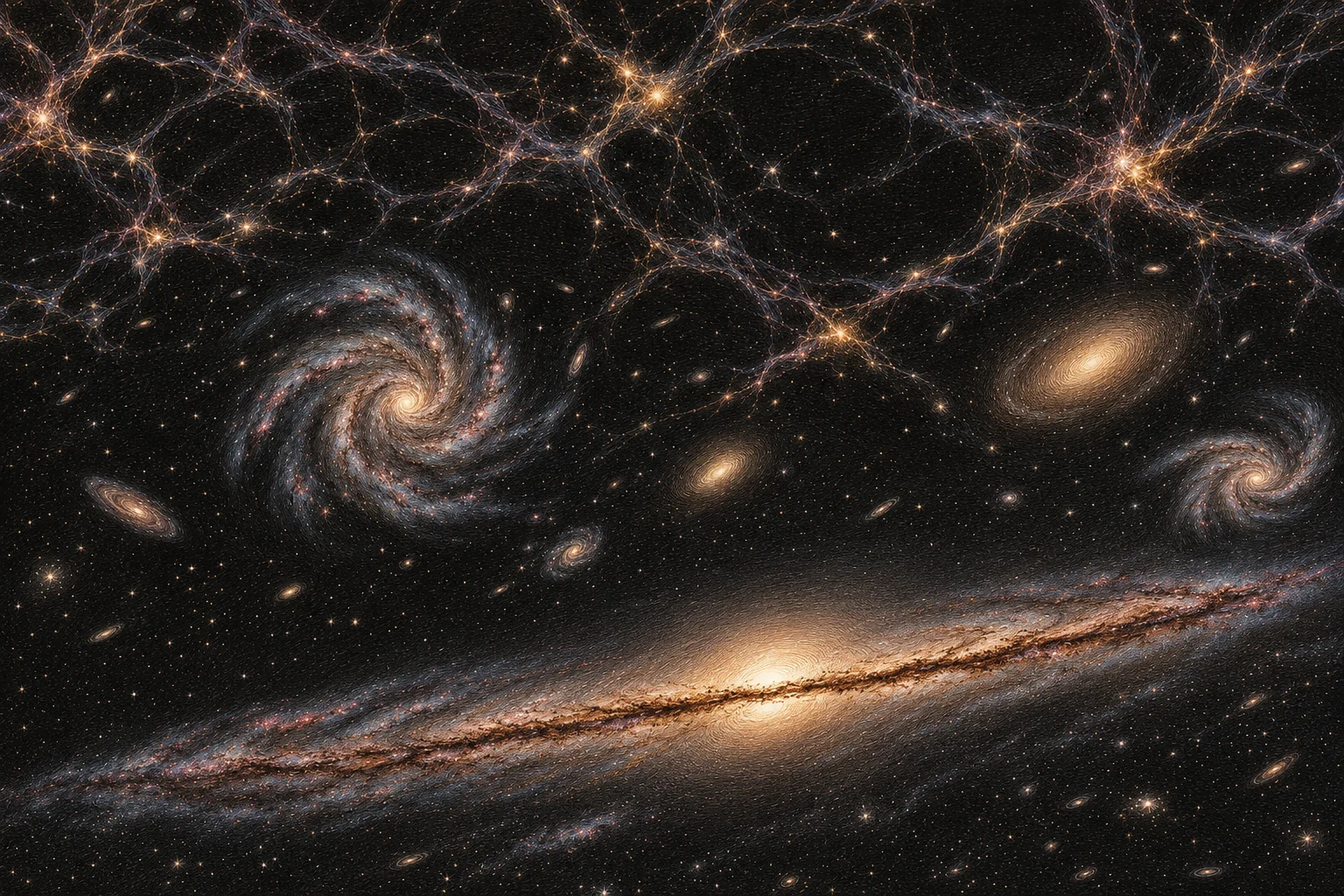
Filaments connect clusters of galaxies across immense voids. The view draws closer, through the scale of superclusters and galaxy groups to an individual spiral.
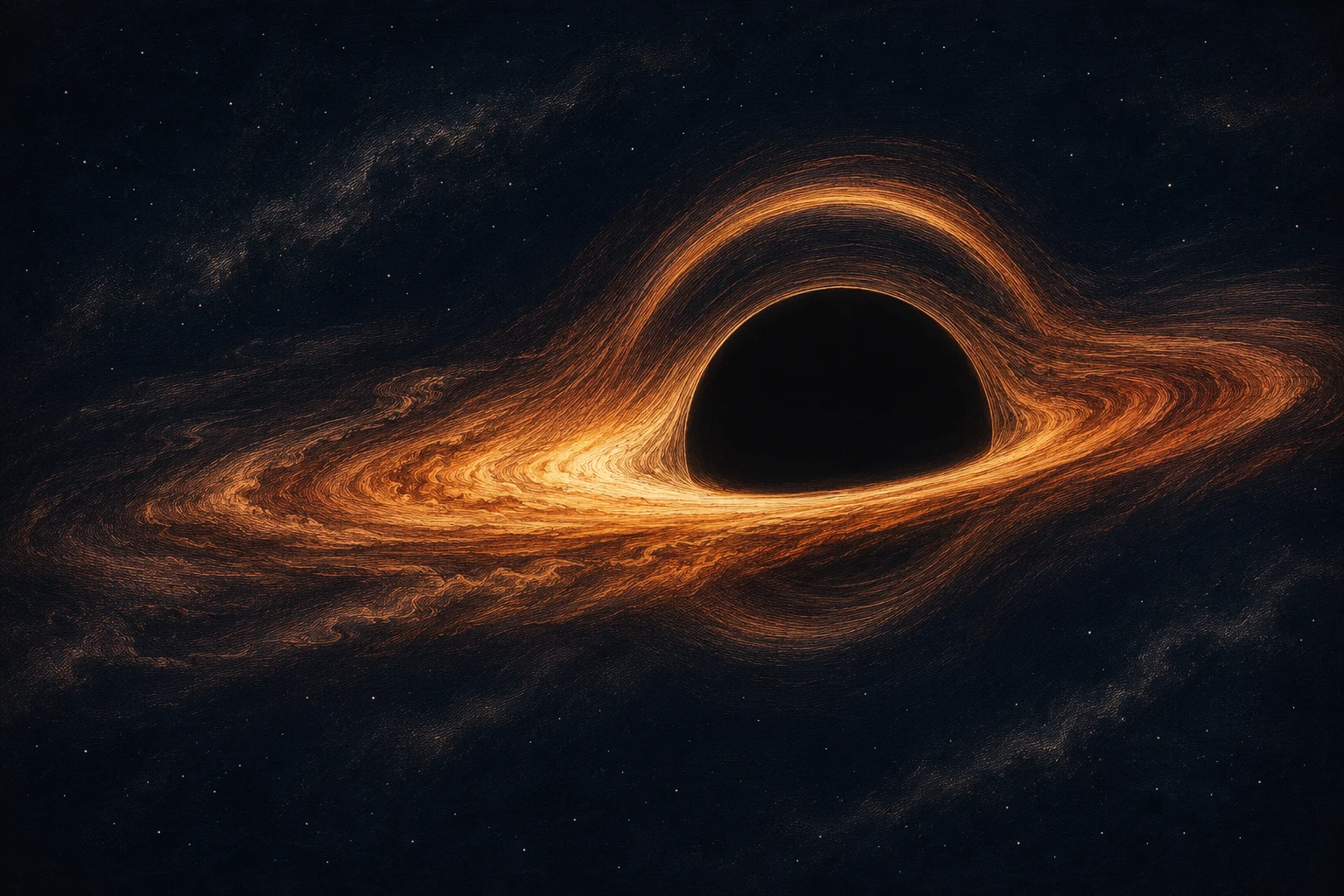
Amber light from an accretion disk bends into an arc above the dark shadow of a black hole.
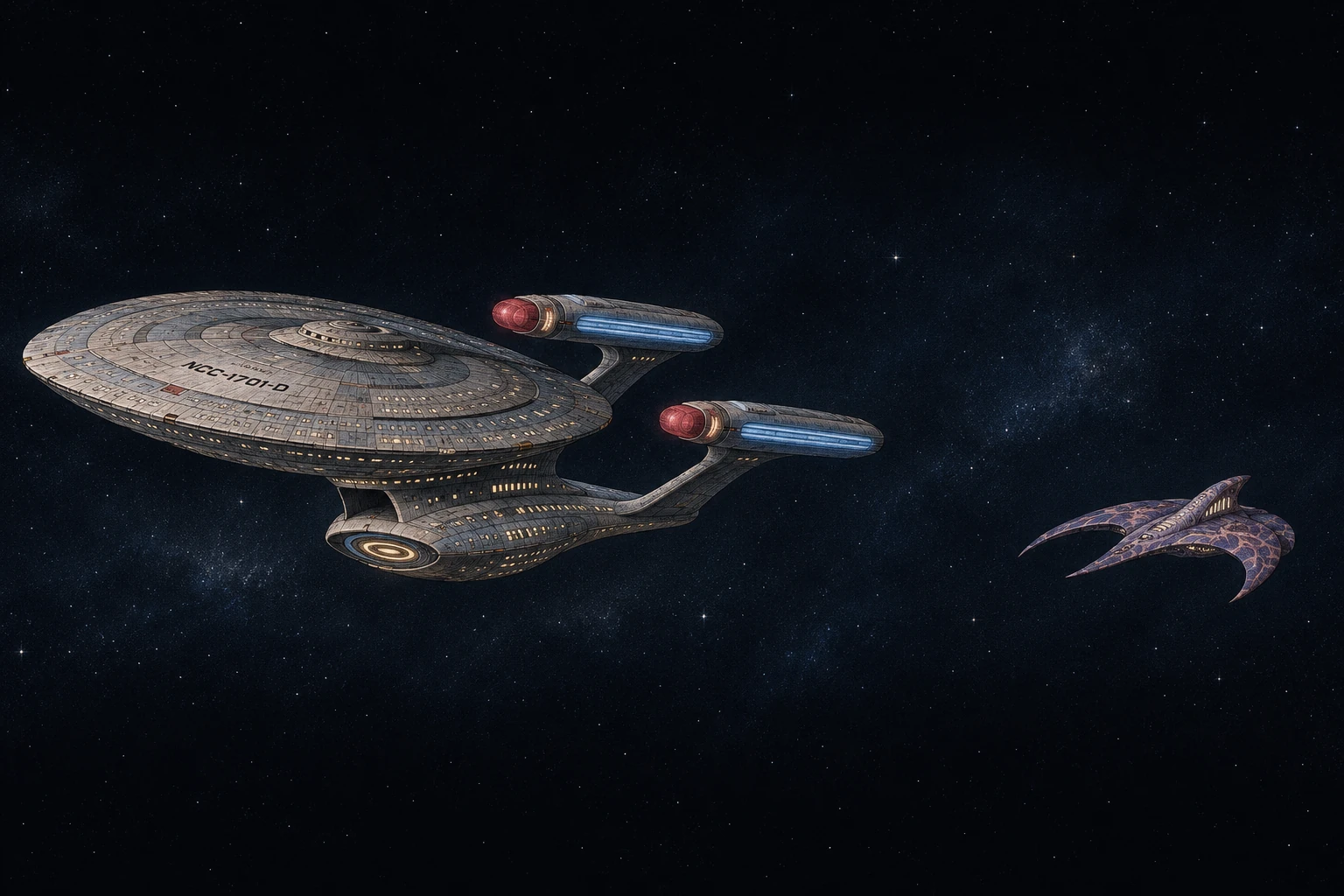
The broad saucer and twin nacelles of Star Trek’s USS Enterprise-D catch the light on the left. A smaller violet White Star from Babylon 5 passes far to starboard.
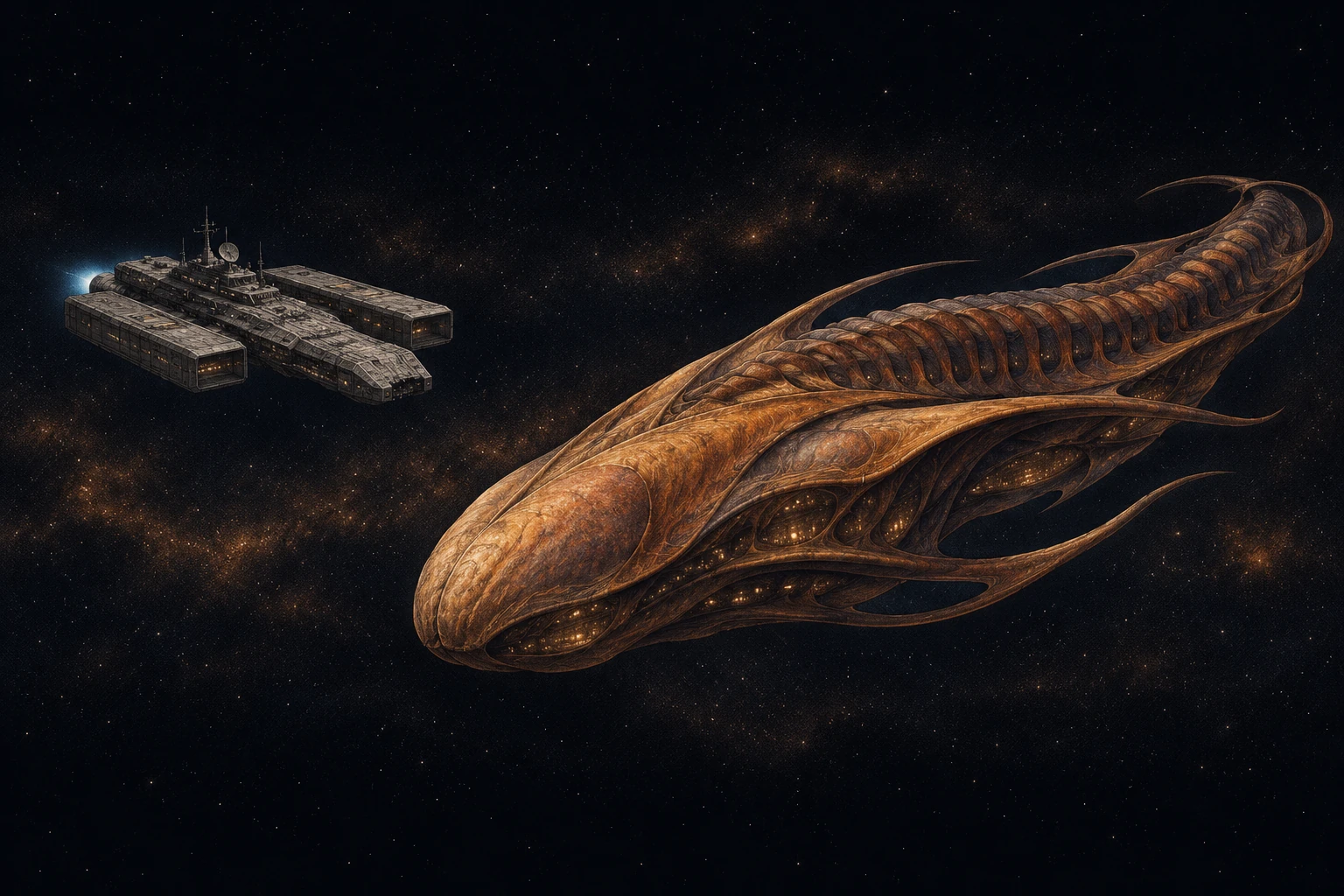
Moya, the bronze living ship from Farscape, fills the right side of the sky. In the distance to the left, Stargate’s Daedalus shows its two squared-off hangar pods.
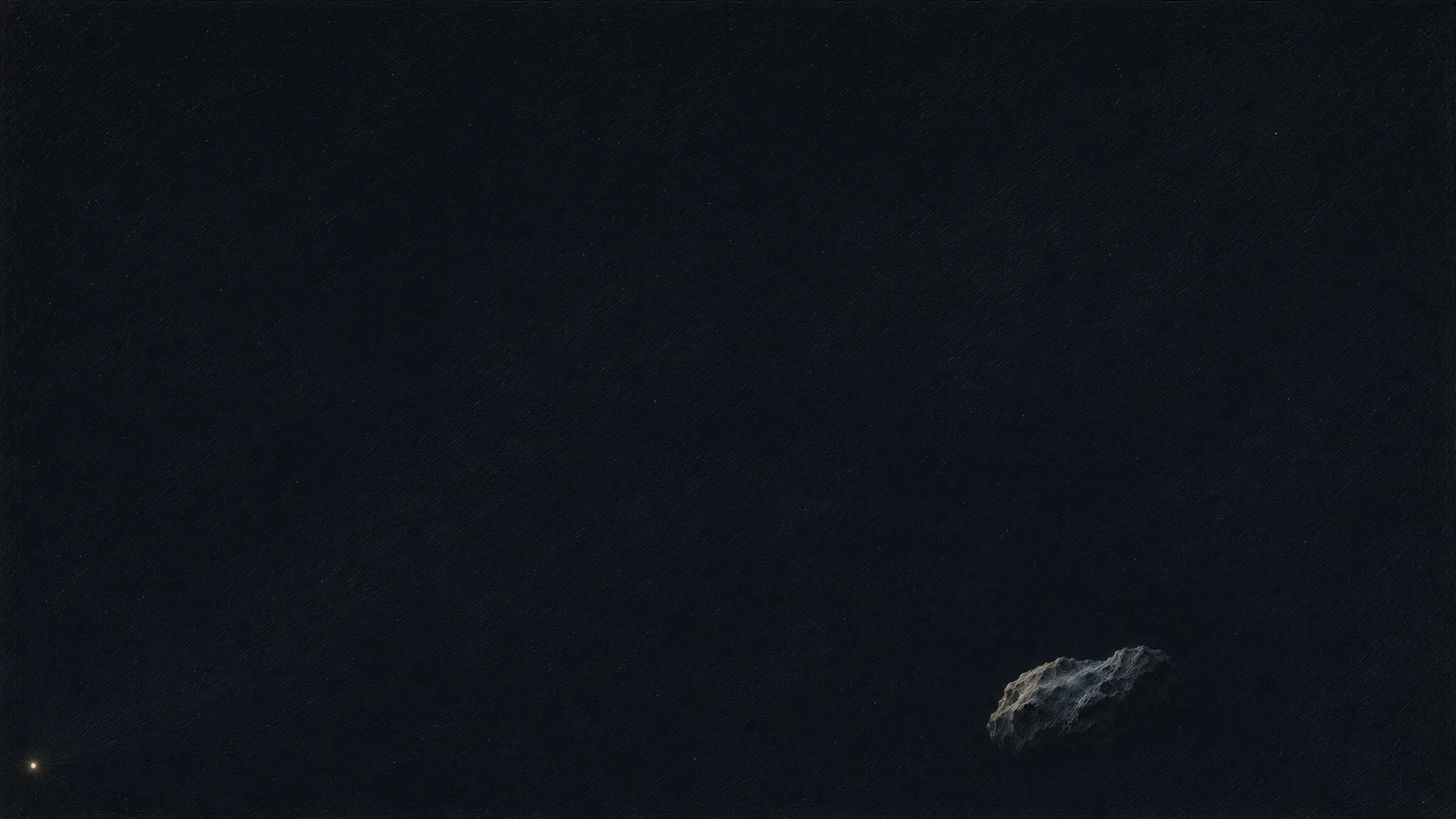
A single cold comet nucleus hangs in a broad field of distant stars. The Oort cloud is a distant reservoir inferred from comet orbits, far beyond the region dominated by the solar wind.
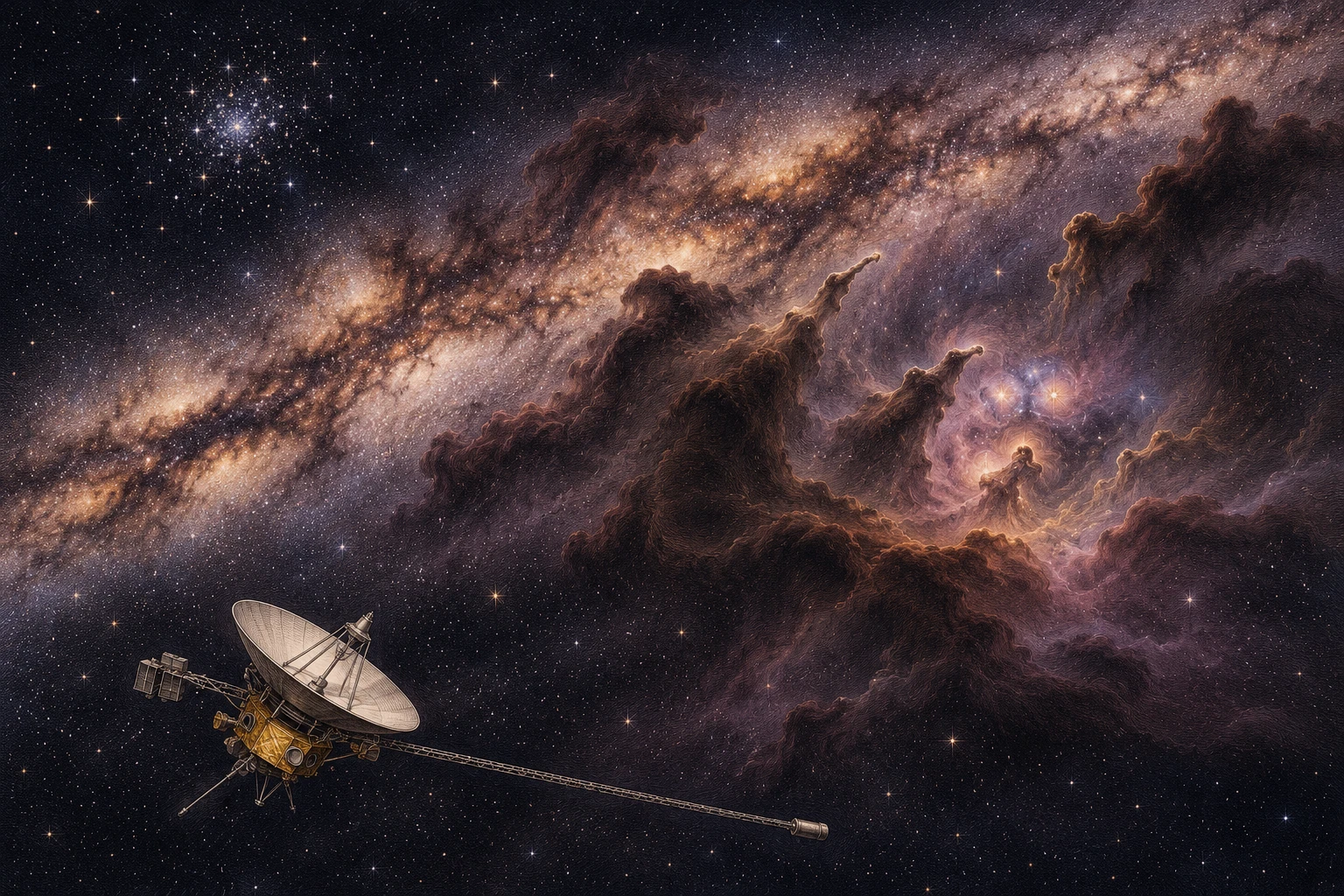
Inside the Milky Way, stars shine through clouds of interstellar dust. On the Sunward side of the Oort cloud, the dish of an outbound probe catches the light.
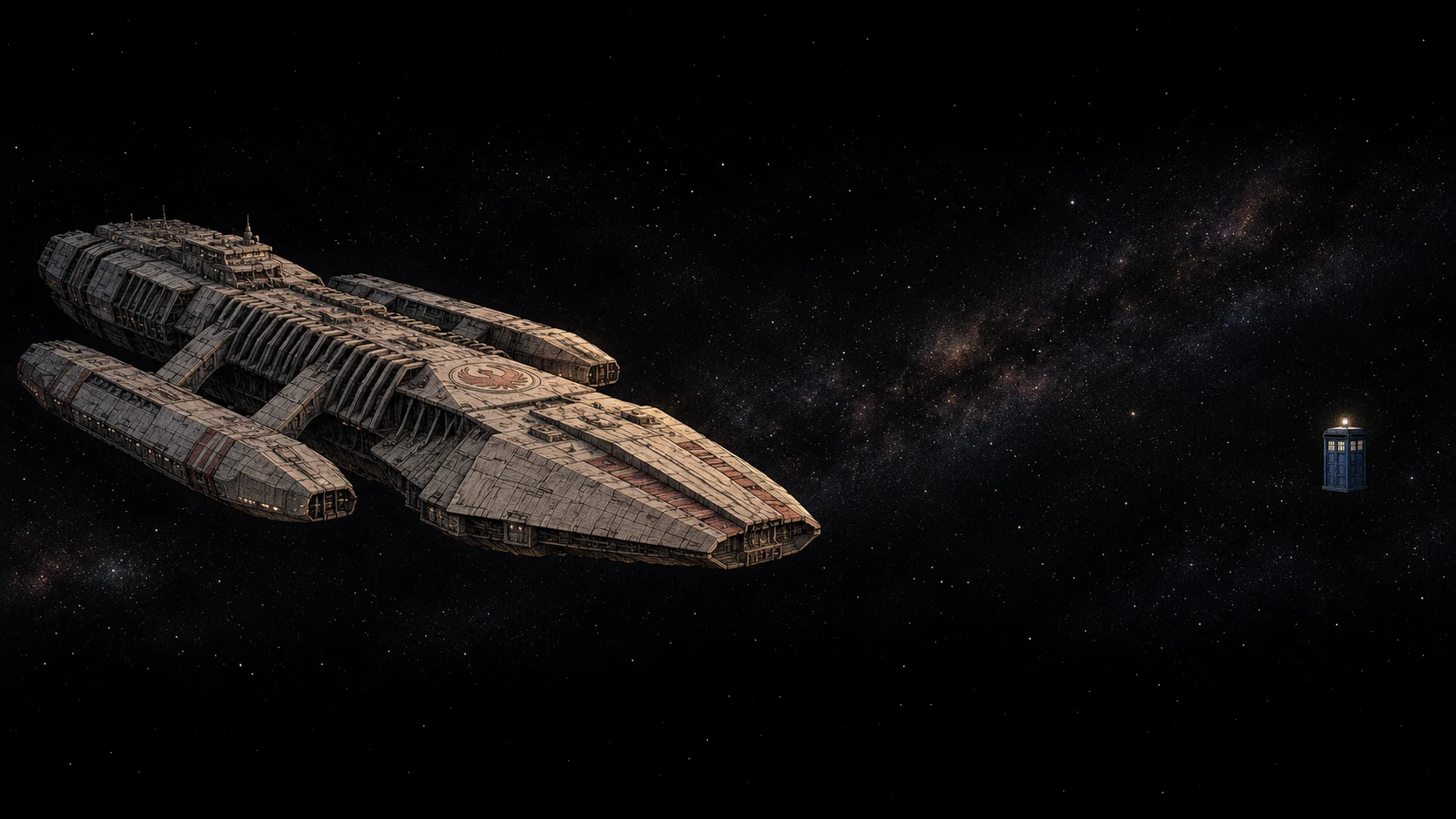
Side light picks out Galactica’s ribbed hull and long flight pods. A tiny blue TARDIS from Doctor Who floats far to the right.
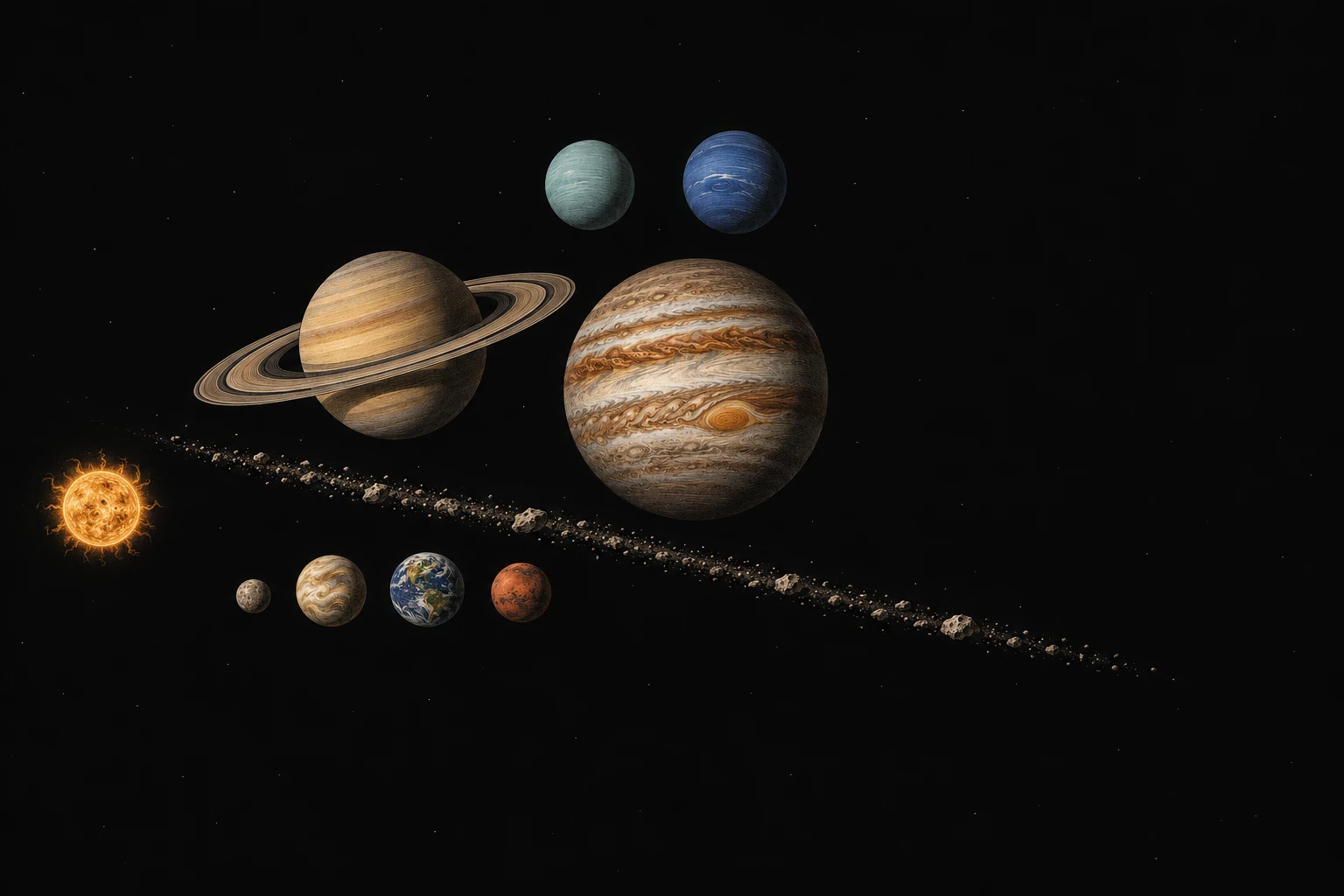
The outer giants and the smaller inner planets share a star field. The asteroid belt arcs between them toward the Sun. Sizes and distances are compressed.
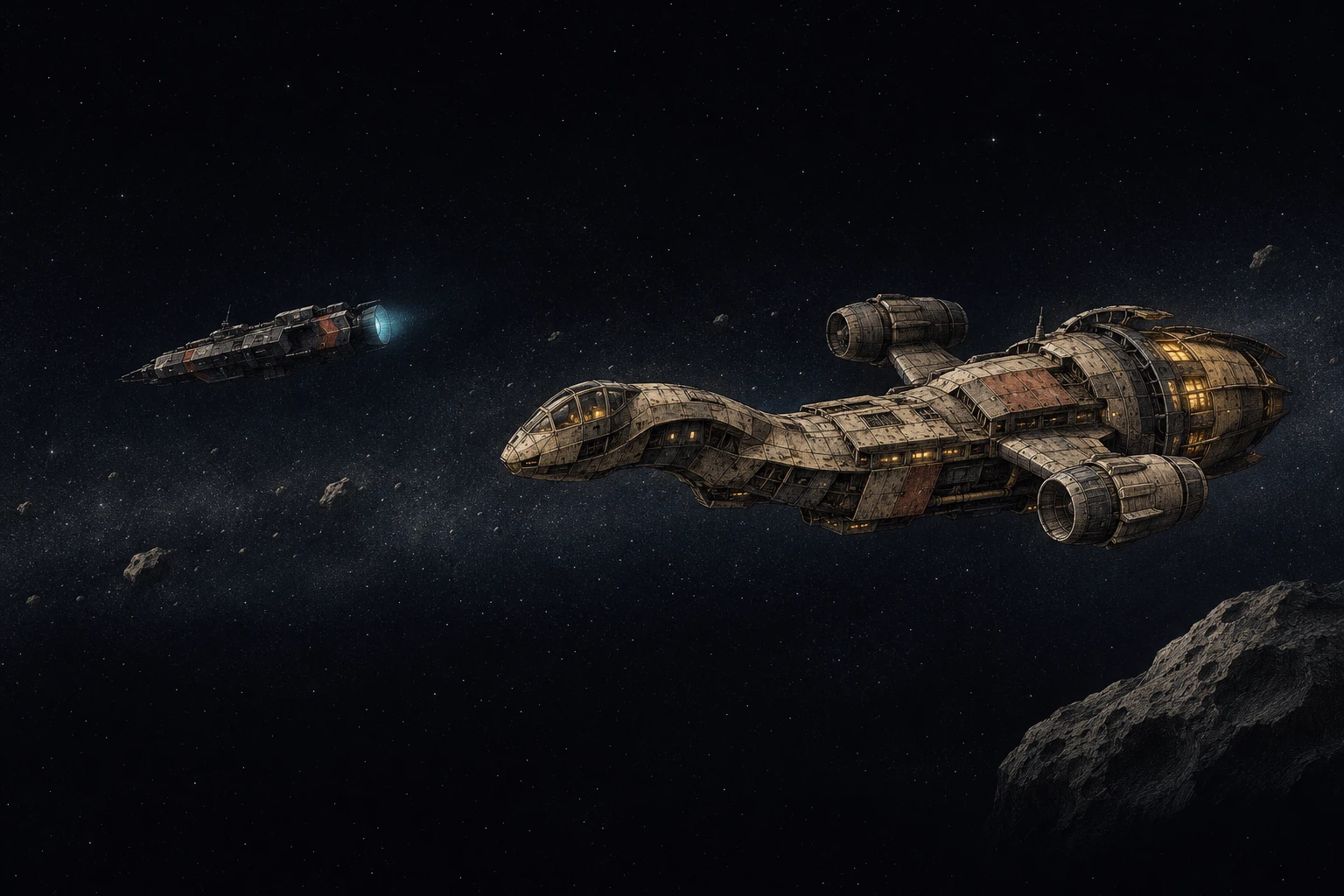
Serenity and the more distant Rocinante pass through the asteroid belt.
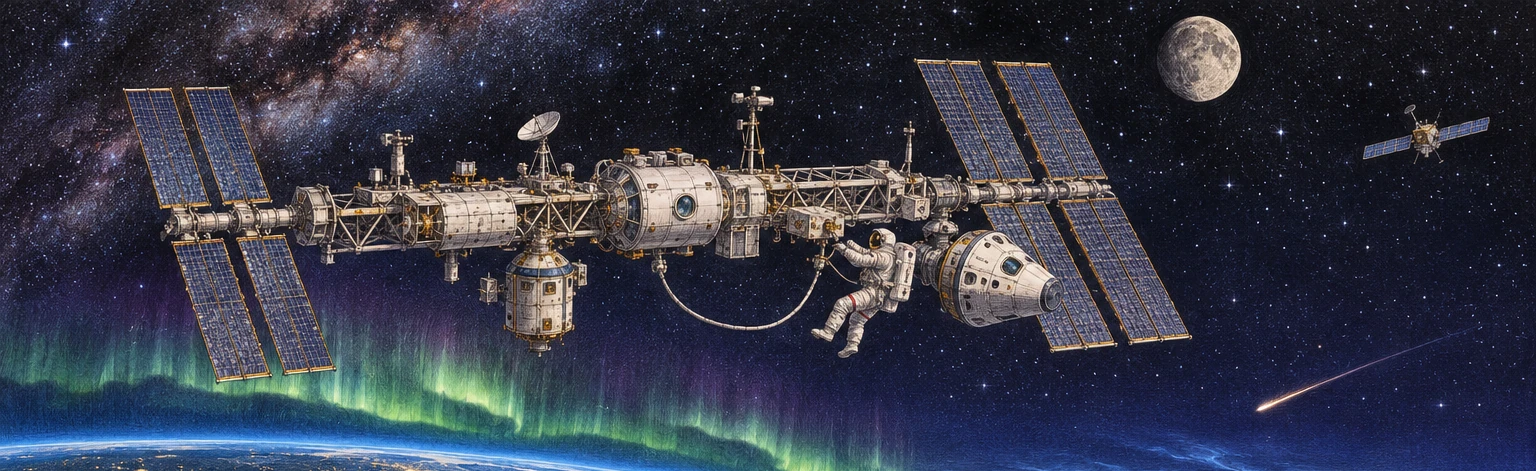
From the Moon toward Earth, a satellite, spacecraft and spacewalking astronaut come into view. Earth’s curved limb and aurora lie below.
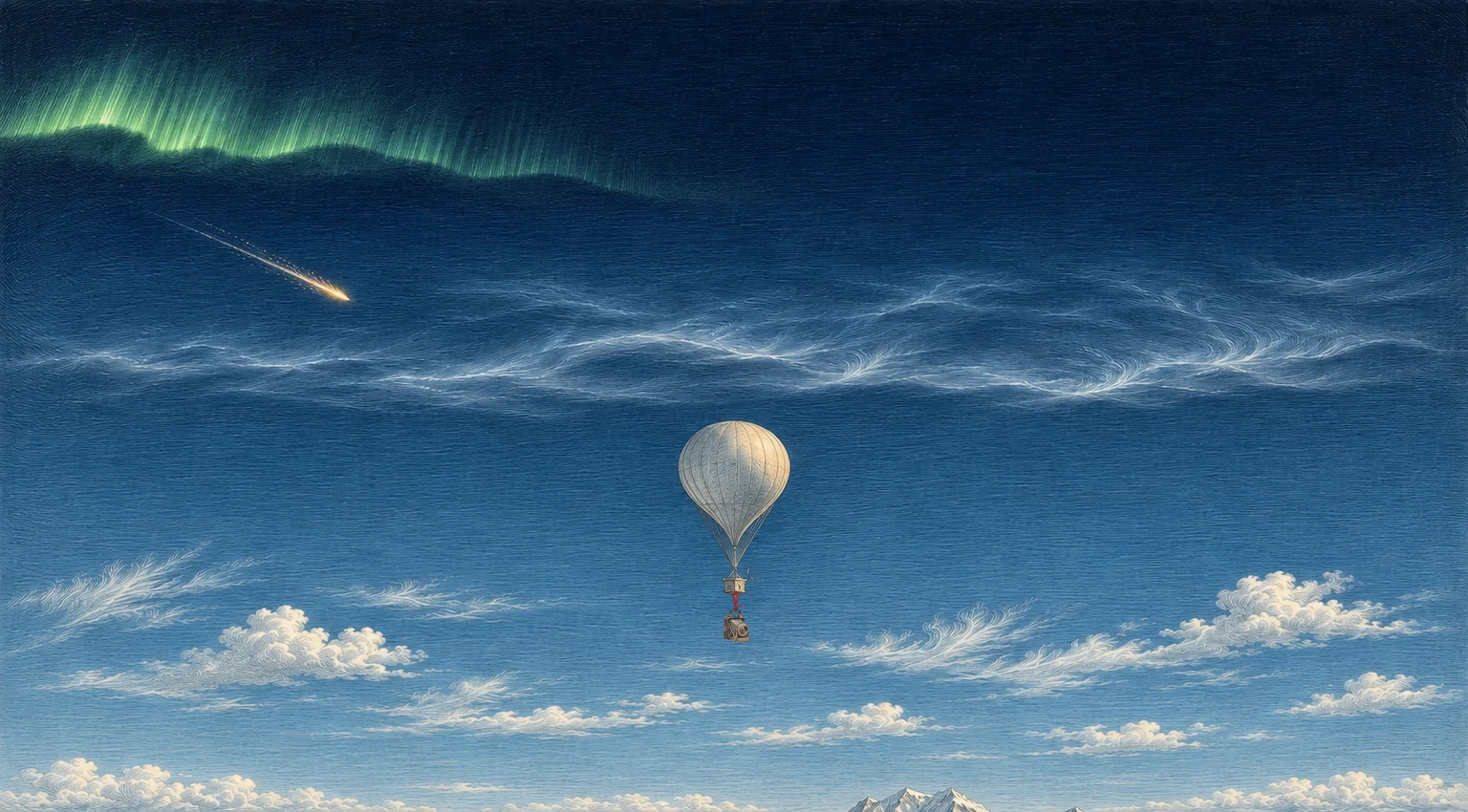
The descent crosses the tenuous exosphere, auroras in the thermosphere, and the meteor trails of the mesosphere. A press camera hangs by a red ribbon beneath a research balloon in the stratosphere, above the cloud-bearing troposphere.
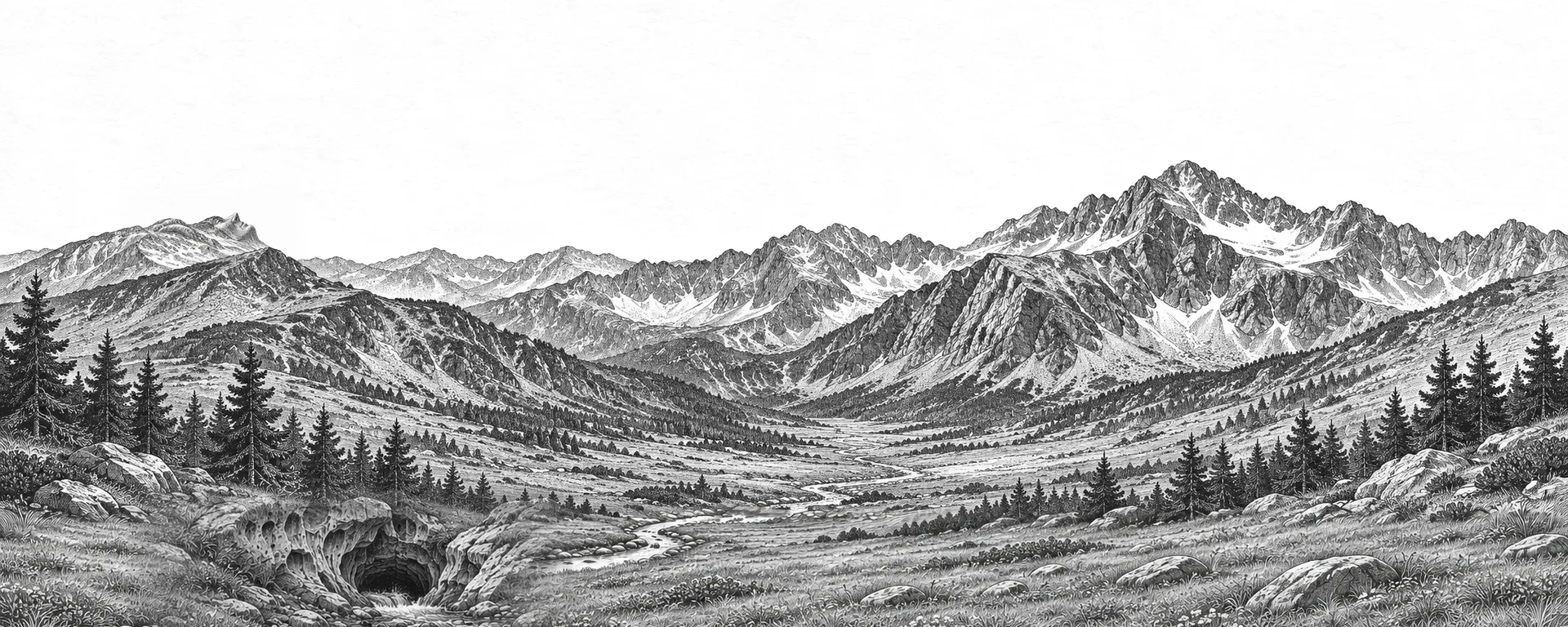
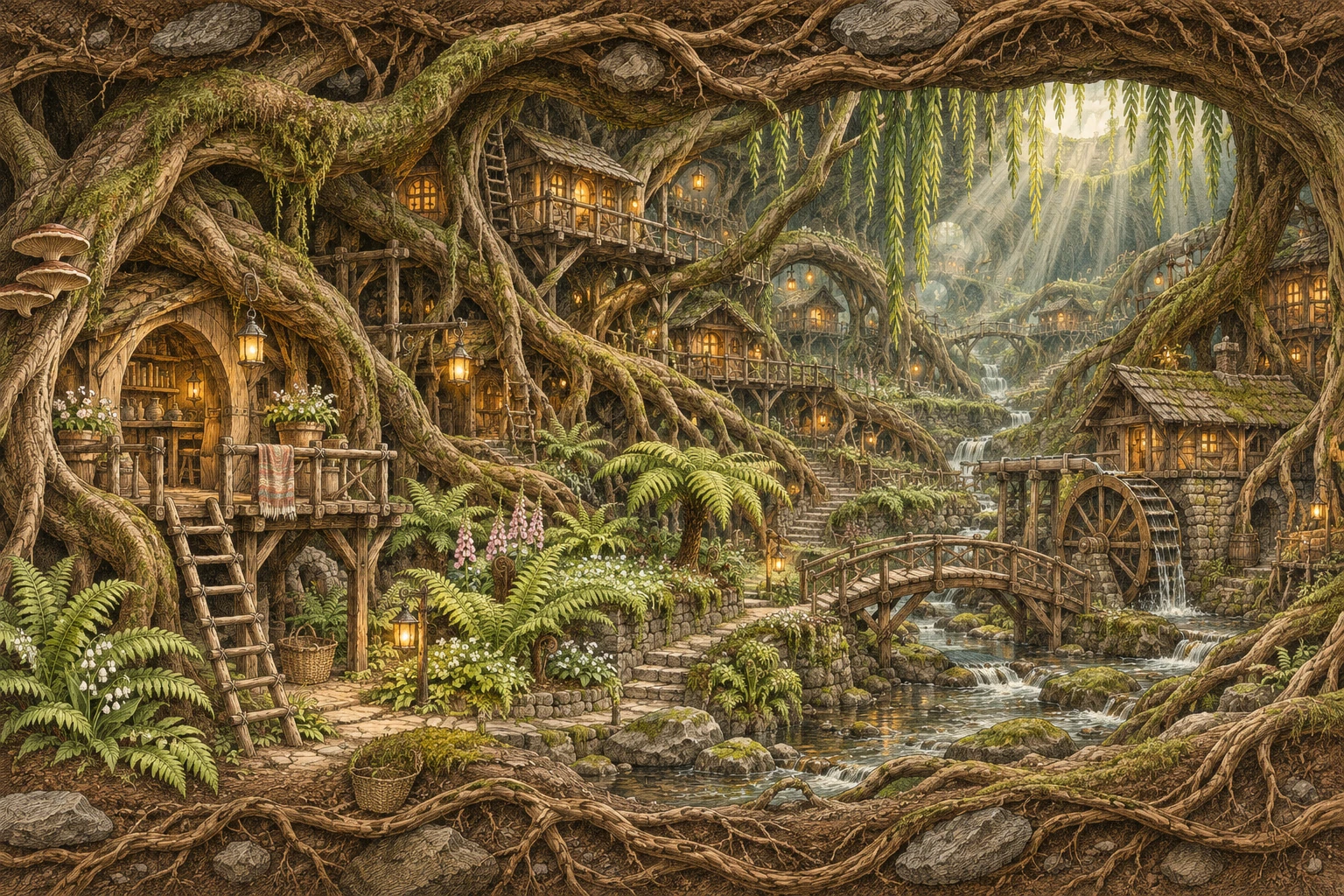
Beneath the trees, a sinkhole admits daylight to ferns and wooden dwellings. A stream passes under a footbridge and turns a waterwheel.
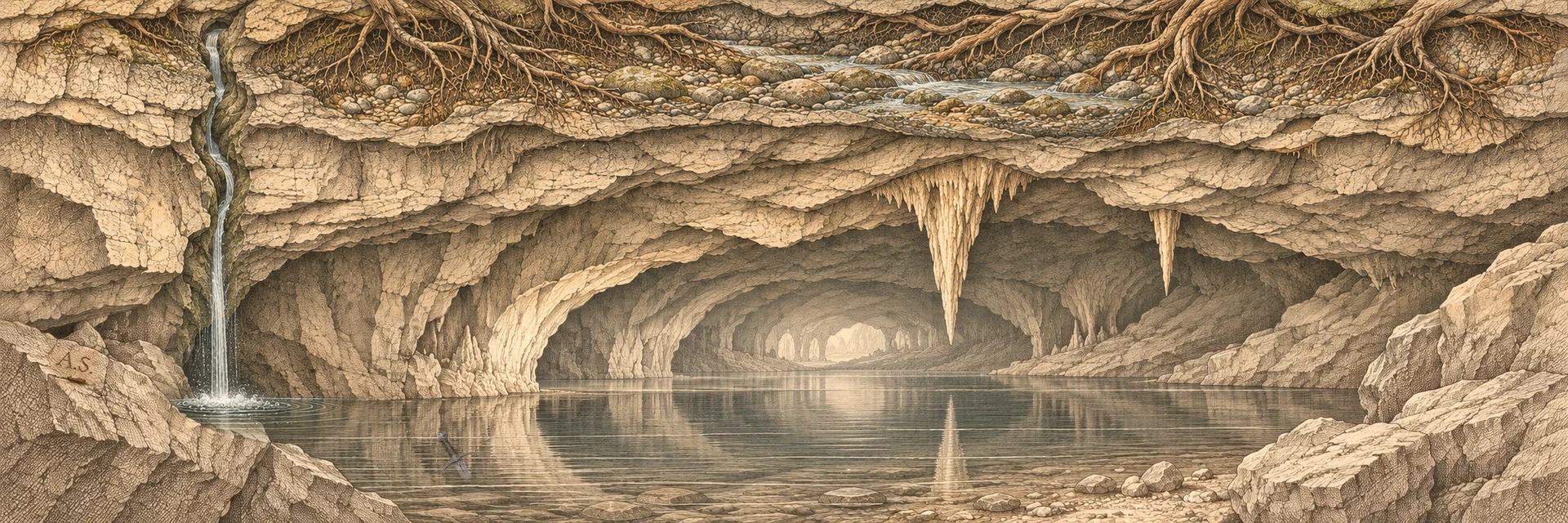
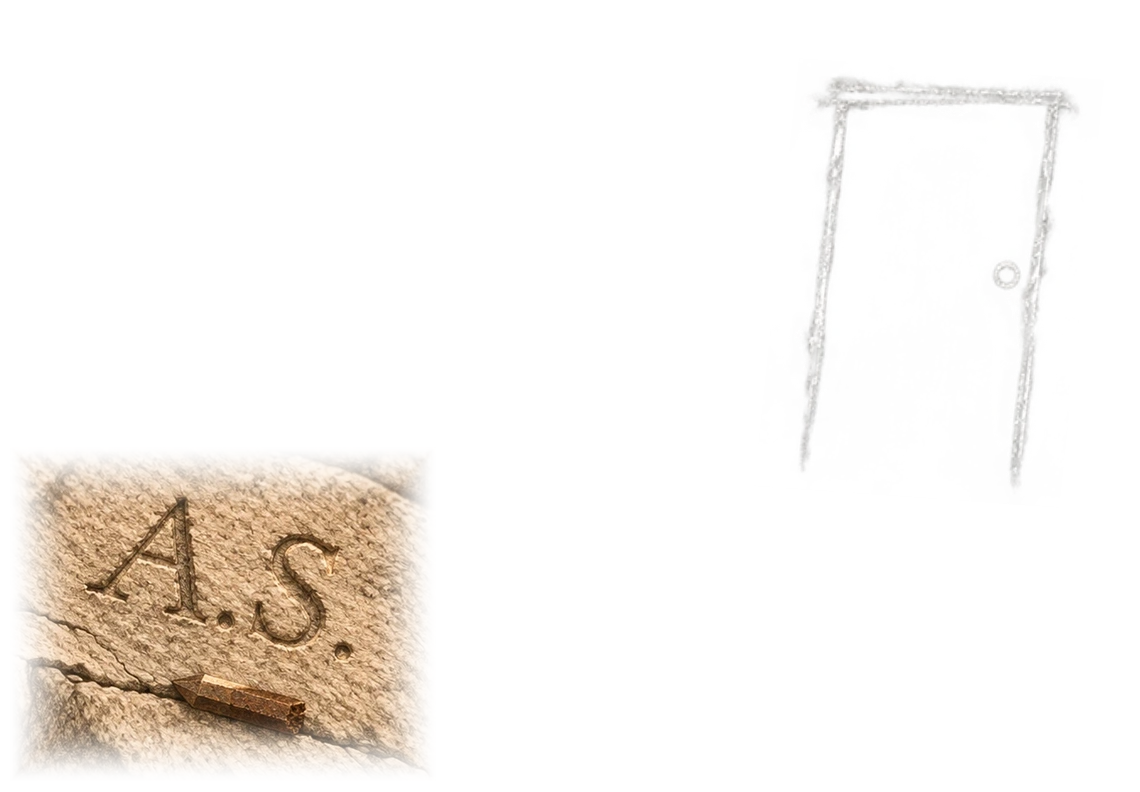
Beneath the Tatra valley, a stream falls through a narrow cleft in the roots and limestone into an underground lake. An iron point is wedged in the dry rock below the carved initials A.S. A chalk doorway follows a crack in the cave wall. A sword hilt shows through the water across from a gold ring on the right bank. Three dinosaur tracks cross the shelf below the ring.
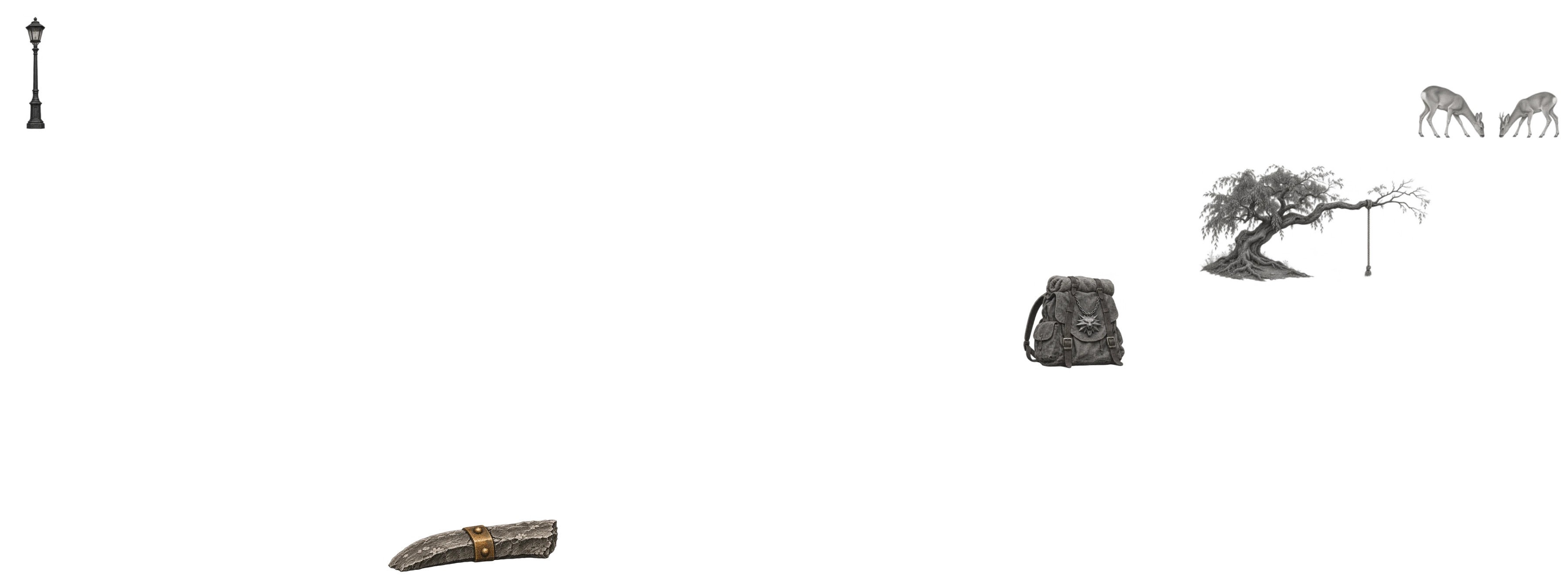
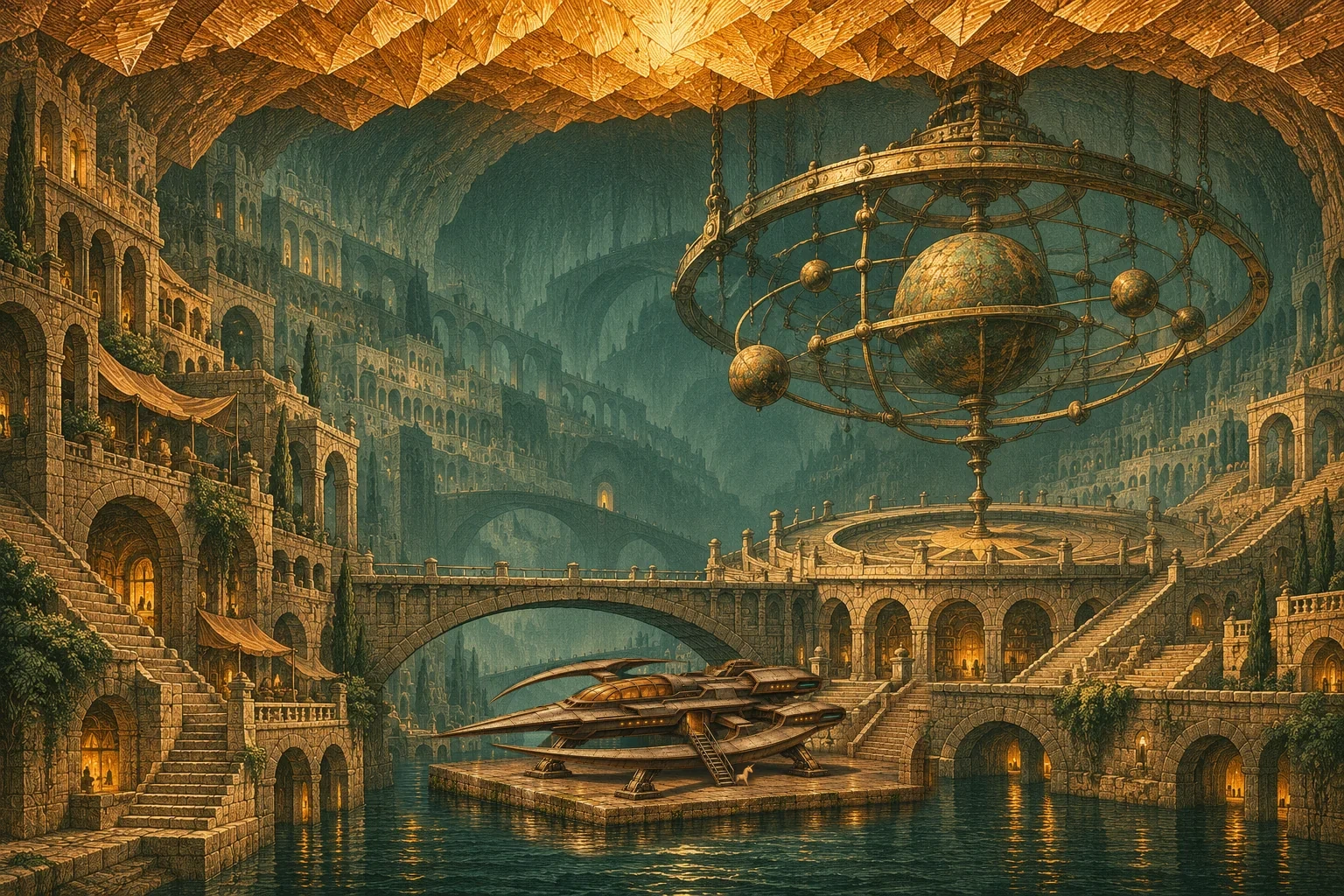
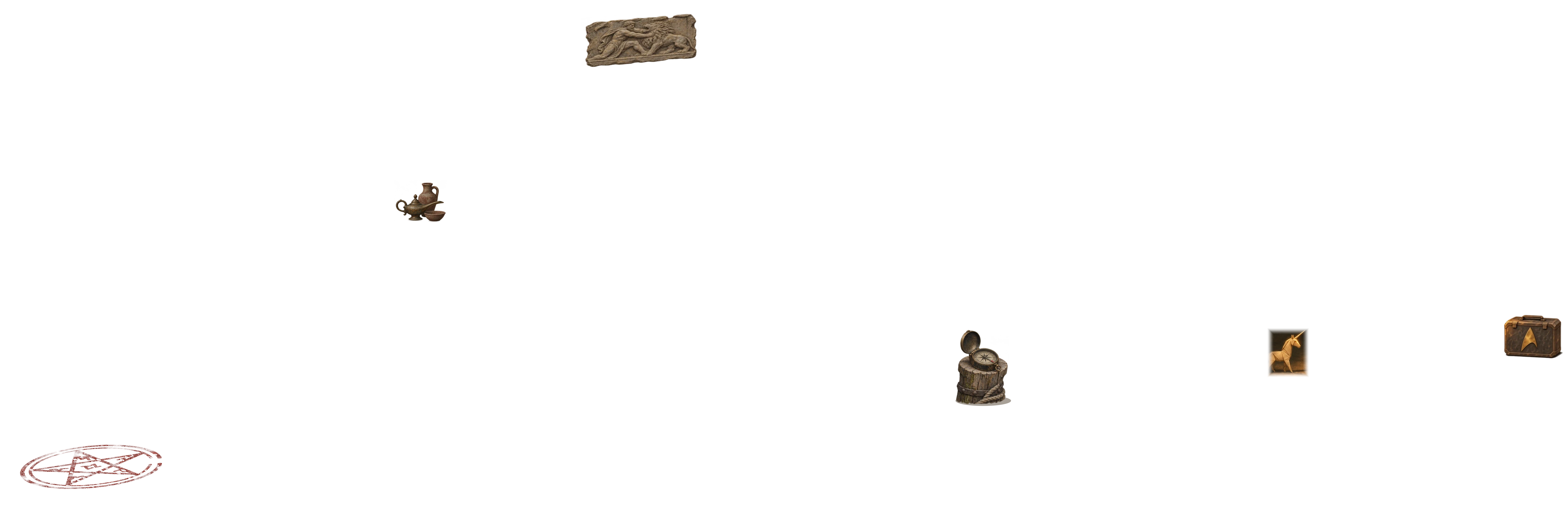
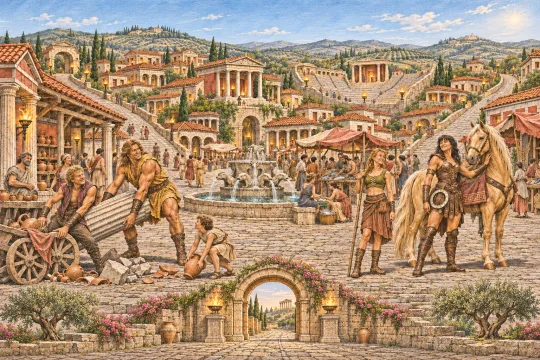
A bronze starship rests on a canal-side quay beneath a bridge. A paper unicorn sits beside its lowest boarding step. A worn Starfleet case stands at the foot of the stone stairs. A model of the planets hangs above the observatory. Two pale strips of tape cross a lit window above the canal. A scuffed red pentagram marks the dry landing at the foot of the stairs. A compass sits on a mooring post. A wrestler and lion are carved into the bridge, and a brass lamp shares a shelf with pottery.
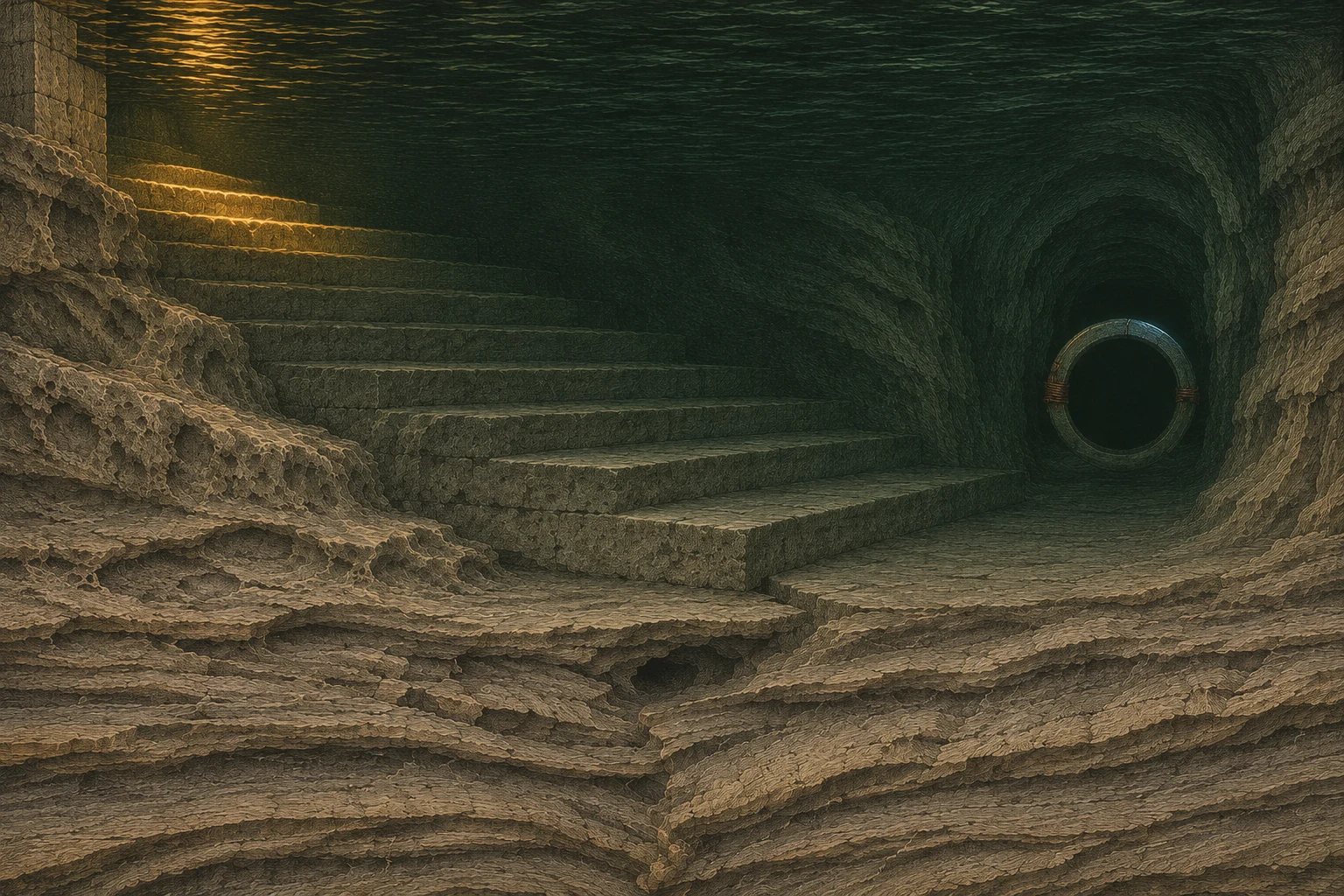
A flooded stair leads to a stone ring half buried in silt. A faded red thread is knotted around a bronze joint and trails into the dark opening.
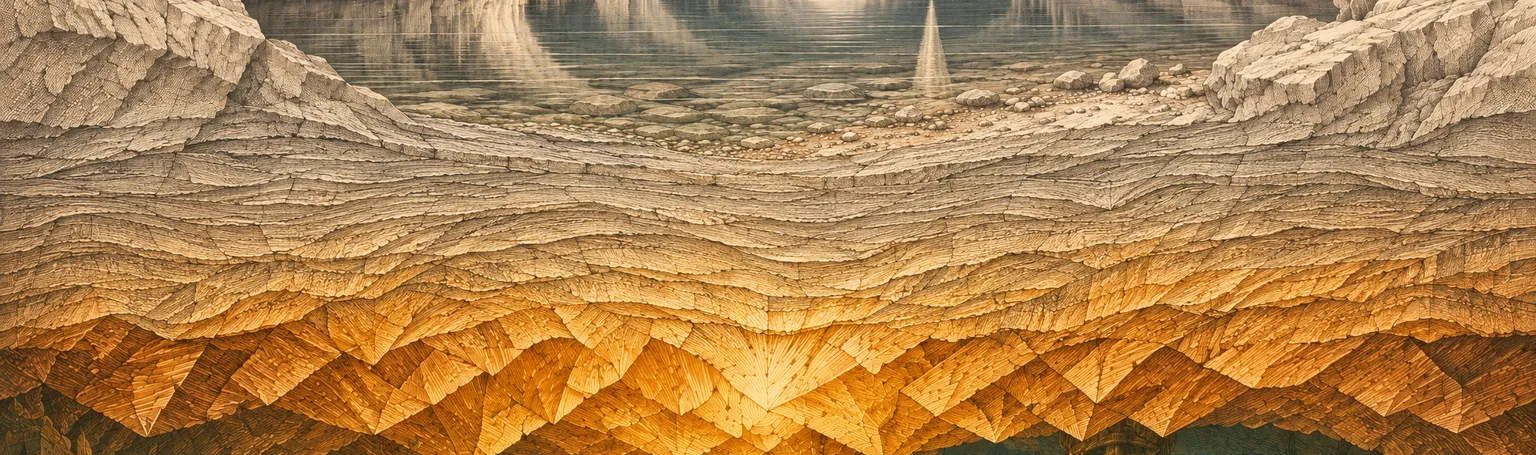
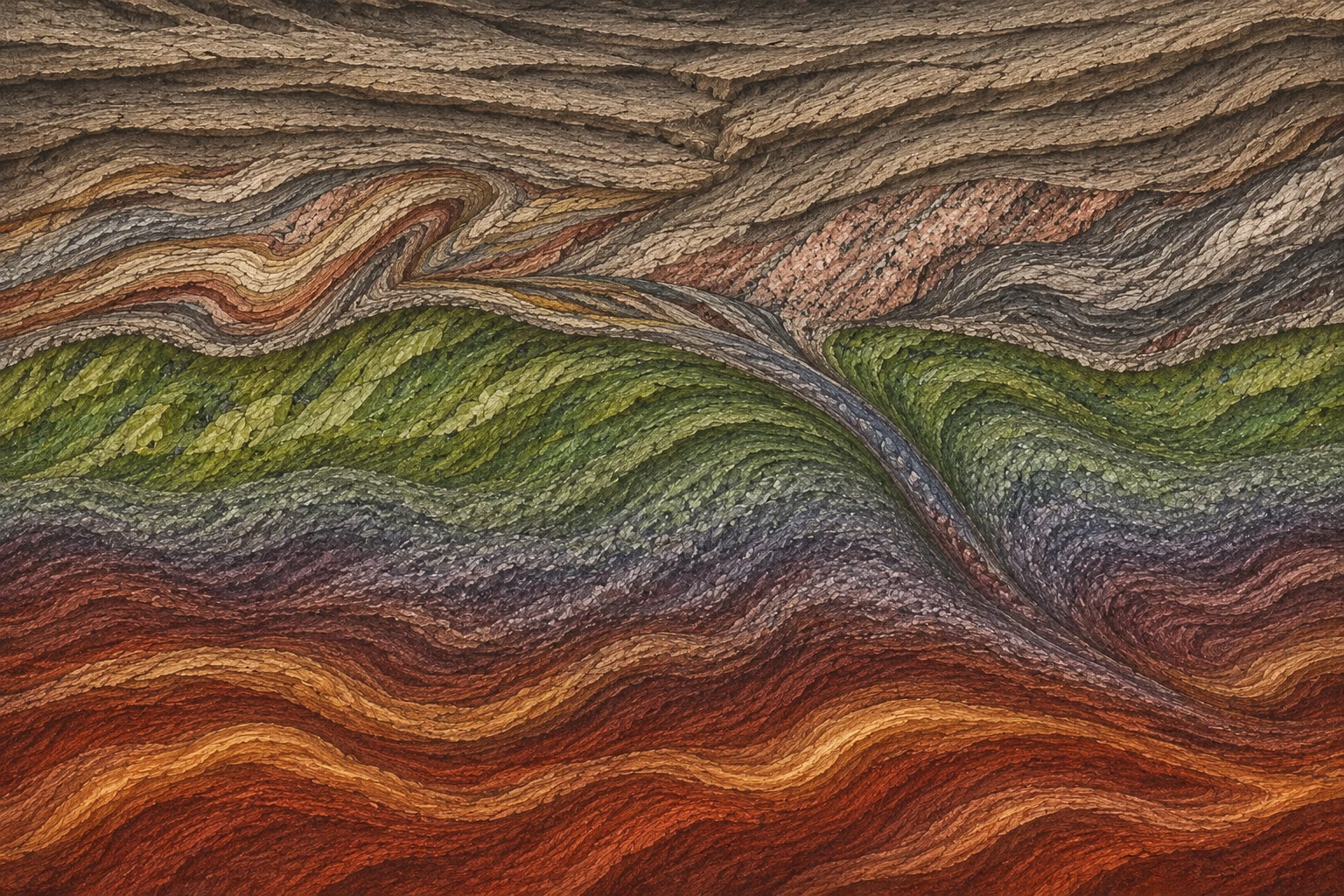
A geological cutaway passes from continental crust across the Moho into the upper mantle. Beneath the rigid lithosphere, solid rock deforms slowly in the asthenosphere. Mineral structures change through the transition zone, roughly 410 to 660 kilometres deep, into the denser lower mantle.
At the base of the mantle, heterogeneous solid rock in the D double-prime region meets liquid iron alloy. This boundary lies about 2,900 kilometres beneath the surface.
Currents of liquid iron alloy in the outer core surround the solid inner core. Three worn steps cut into the golden grain descend to the right.